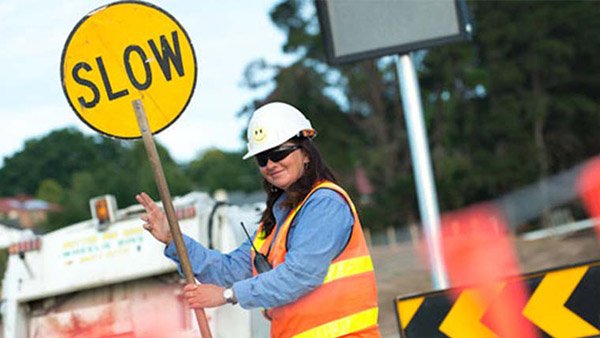
Traffic control is a safety-focused responsibility that requires much more than understanding signs and basic road rules. Workers may need to manage vehicles, communicate with other team members, respond to changing conditions, and help maintain a safe environment around roadworks or construction activities. Practical training gives participants an opportunity to demonstrate that they can apply what they have learned in realistic situations.
During a traffic control practical assessment, assessors generally focus on whether a participant can perform required tasks safely, consistently, and according to the procedures taught during training. Understanding the areas that may be observed can help participants approach practical training with greater confidence.
Understanding Traffic Control Procedures
One of the first things an assessor may consider is whether the participant understands the procedures required for the activity. Knowing the theory is useful, but practical training is about applying that knowledge correctly.
Participants should understand their assigned responsibilities, follow instructions, recognise potential hazards, and know what actions are appropriate in different traffic situations. Assessors may observe whether tasks are completed in the correct sequence and whether safety remains a priority throughout the exercise.
Correct Use Of Traffic Control Equipment
Traffic controllers may work with signs, communication equipment, personal protective equipment, and other traffic management resources. Practical training allows participants to demonstrate that they know how to use relevant equipment correctly.
An assessor may pay attention to the way equipment is handled, positioned, checked, and used. Participants should avoid rushing simply to complete a task quickly. Careful and controlled actions can demonstrate that they understand why each piece of equipment is important to workplace safety.
Clear Communication Skills
Communication is a major part of traffic control work. Workers often need to coordinate with supervisors, other traffic controllers, construction personnel, and road users. Instructions must be communicated clearly to reduce confusion.
During a traffic control practical assessment, participants may be expected to demonstrate effective verbal communication, appropriate signalling, and the correct use of communication devices where required. Assessors may also look at whether participants listen carefully and respond appropriately to instructions.
Hazard Awareness And Situational Observation
Traffic environments can change quickly. Unexpected vehicles may come up behind you, people on foot may walk into restricted areas, or conditions at the job may change. For this reason, assessors often look closely at situational awareness.
Participants should continuously observe their surroundings instead of focusing on only one task. Identifying hazards early and responding according to established procedures demonstrates an understanding of the responsibilities associated with traffic control work.
Good observation also means avoiding unnecessary distractions. Remaining attentive can be particularly important when coordinating vehicle movements or working close to active traffic.
Following Workplace Safety Requirements
Safety procedures are central to practical traffic control training. Assessors may examine whether participants consistently follow the safety practices introduced during their course rather than applying them only when reminded.
This can involve utilising safe work techniques, adhering to site instructions, keeping appropriate positioning, and donning the proper personal protective equipment. Participants should demonstrate that safety is part of their normal working approach.
Responding To Changing Situations
Not every practical scenario will remain predictable. Assessors may introduce different situations to determine whether participants can respond appropriately without abandoning established procedures.
The purpose is not simply to test how quickly someone reacts. Instead, an assessor may look for controlled decision-making, awareness, communication, and adherence to the procedures covered during training. Staying calm and considering the surrounding environment can help participants make safer decisions.
Professional Conduct And Readiness
Practical assessment can also provide an indication of a participant’s overall readiness for traffic control responsibilities. Arriving prepared, listening to instructions, asking relevant questions when clarification is needed, and treating safety requirements seriously all contribute to professional conduct.
Assessors are generally interested in consistent competency rather than a participant trying to perform tasks as quickly as possible. Careful execution and attention to instructions are more valuable than rushing through an activity.
Conclusion
Practical traffic control training is designed to determine whether participants can turn theoretical knowledge into safe and appropriate workplace actions. Assessors may consider equipment use, communication, hazard awareness, safety procedures, decision making, and overall task performance. Preparing for a traffic control practical assessment therefore involves more than memorising course material. Participants should focus on understanding procedures, remaining observant, communicating clearly, and demonstrating safe practices consistently. These abilities are important not only for completing an assessment but also for developing the practical awareness needed when working around traffic and active worksites.